

The Mississippi Flyway
A Highway in the Sky — and It Runs Through Pecan Island
Every autumn, hundreds of millions of birds take to the skies across North America. They follow ancient routes — corridors shaped over thousands of years by geography, climate, and the pull of survival. The Mississippi Flyway is one of the four great North American flyways, and it is arguably the most important.
Stretching from the boreal forests of Canada to the Gulf of Mexico, the flyway follows the Mississippi River basin — the largest river drainage system in North America. At its southern terminus, where the river fans out into a vast mosaic of coastal marshes, barrier islands, and shallow bays, lies one of the most ecologically vital pieces of real estate on the continent: the Louisiana Gulf Coast.
Pecan Island sits at the heart of this corridor. It is not a waypoint. It is a destination — a place where exhausted birds land, feed, rest, and prepare for the next leg of a journey that may span thousands of miles. Without it, the flyway breaks.
40%
of all North American waterfowl use the Mississippi Flyway each year
325+
bird species documented along the Louisiana Gulf Coast corridor
3,000 mi
the flyway stretches from the Canadian boreal forest to the Gulf of Mexico
Why It Matters
The Funnel at the End of the Flyway
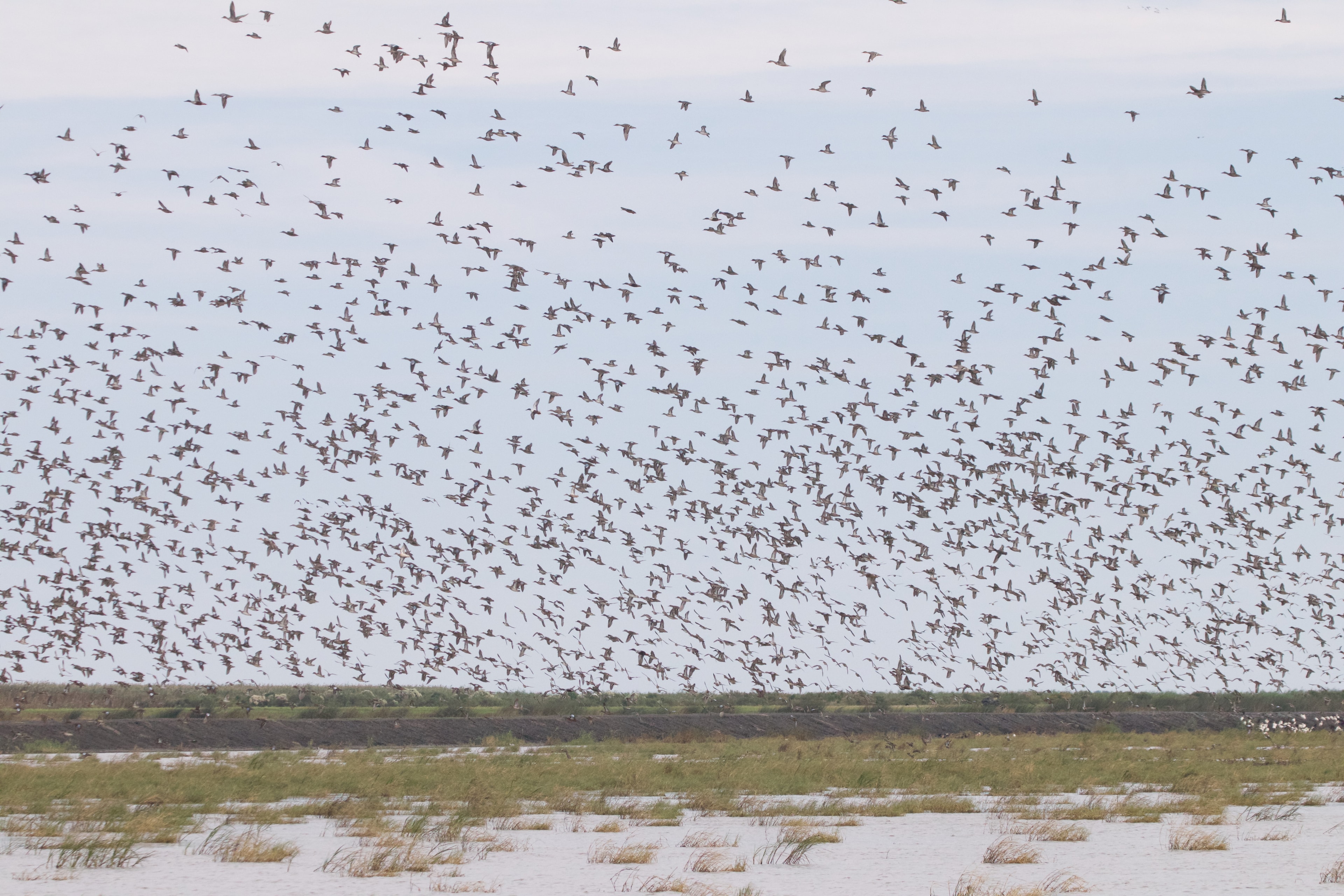
The Mississippi Flyway acts like a funnel. As birds move south, the continent narrows. By the time they reach Louisiana, millions of individuals from dozens of species are compressed into a relatively small band of coastal habitat. There is no alternative route. There is no backup marsh.
This concentration makes the Louisiana coast both extraordinarily productive and extraordinarily vulnerable. A single large-scale disturbance — a catastrophic oil spill, a major industrial development, or the sustained noise and light pollution of a commercial rocket launch facility — can affect populations across the entire continent.
Waterfowl are not adaptable in the way we might hope. They return to the same marshes, the same feeding grounds, the same roost sites year after year. Displace them once and many will not find suitable alternatives. Displace them repeatedly and populations collapse.

"Pecan Island is not just a beautiful place. It is a biological necessity — a refueling station for species that have no other option at the end of the longest journey of their lives."
Species at Risk
Who Stands to Lose the Most
Snow Goose
Millions of snow geese funnel through Louisiana's coastal marshes each winter, relying on undisturbed wetland habitat to rest and refuel before continuing their journey.
Whooping Crane
One of North America's most endangered birds, the whooping crane depends on the Gulf Coast as its primary wintering ground. Any habitat disruption along this narrow corridor is an existential threat.
Roseate Spoonbill
A flagship species of Louisiana's coastal wetlands, the spoonbill is a living indicator of ecosystem health. Noise, light, and chemical pollution from launch operations directly threaten nesting success.
Blue-winged Teal
One of the earliest fall migrants, blue-winged teal arrive in Louisiana's marshes by August — precisely when rocket launch schedules would be ramping up. Disturbance during this window disrupts critical pre-migration staging.